The U.S. Department of Energy issued an emergency order on October 12, 2026 directing PJM Interconnection to use additional generating resources, effective October 13–16. In a sponsored commentary from Solar Mounts LLC, company team member and Michigan resident Terence Parker said the order should serve as a wake-up call for Michigan and the wider PJM region.
Under the order, specified power plants are authorized to operate as needed for reliability, and backup generators at large facilities may run to help reduce grid demand during emergencies. Parker said the order does not mean blackouts are inevitable, but it highlights serious challenges facing the electricity system and the need to add capacity before emergency measures become routine.
Capacity prices and reliability
PJM's capacity auctions, with figures cited from Vicinity Energy's analysis, cleared at $329.17 per megawatt-day for the 2026–2027 delivery year and $333.44 for 2027–2028, the later auction falling short of PJM's stated reliability requirement. Capacity costs are only one component of electricity bills, but Parker said rising prices signal growing pressure on consumers.
Emissions and operating costs
The October order permits designated units to exceed specified operating limits when necessary for reliability and allows PJM to direct backup generation at data centers and other large facilities, potentially including diesel generators as a last resort. Running fossil-fuel plants more frequently can increase emissions depending on the units involved, according to the commentary, and diesel generators would add local noise pollution while exposing operators to high diesel prices.
Weather uncertainty
NOAA's October 15, 2026 winter outlook anticipates warmer-than-average conditions across much of the northern United States, including the Midwest, influenced by a strong El Niño. Parker argued that seasonal forecasts cannot capture every period of extreme demand, and that aging infrastructure, maintenance, changing weather and growing electricity consumption reinforce the need for advance planning.
Solar, storage and interconnection
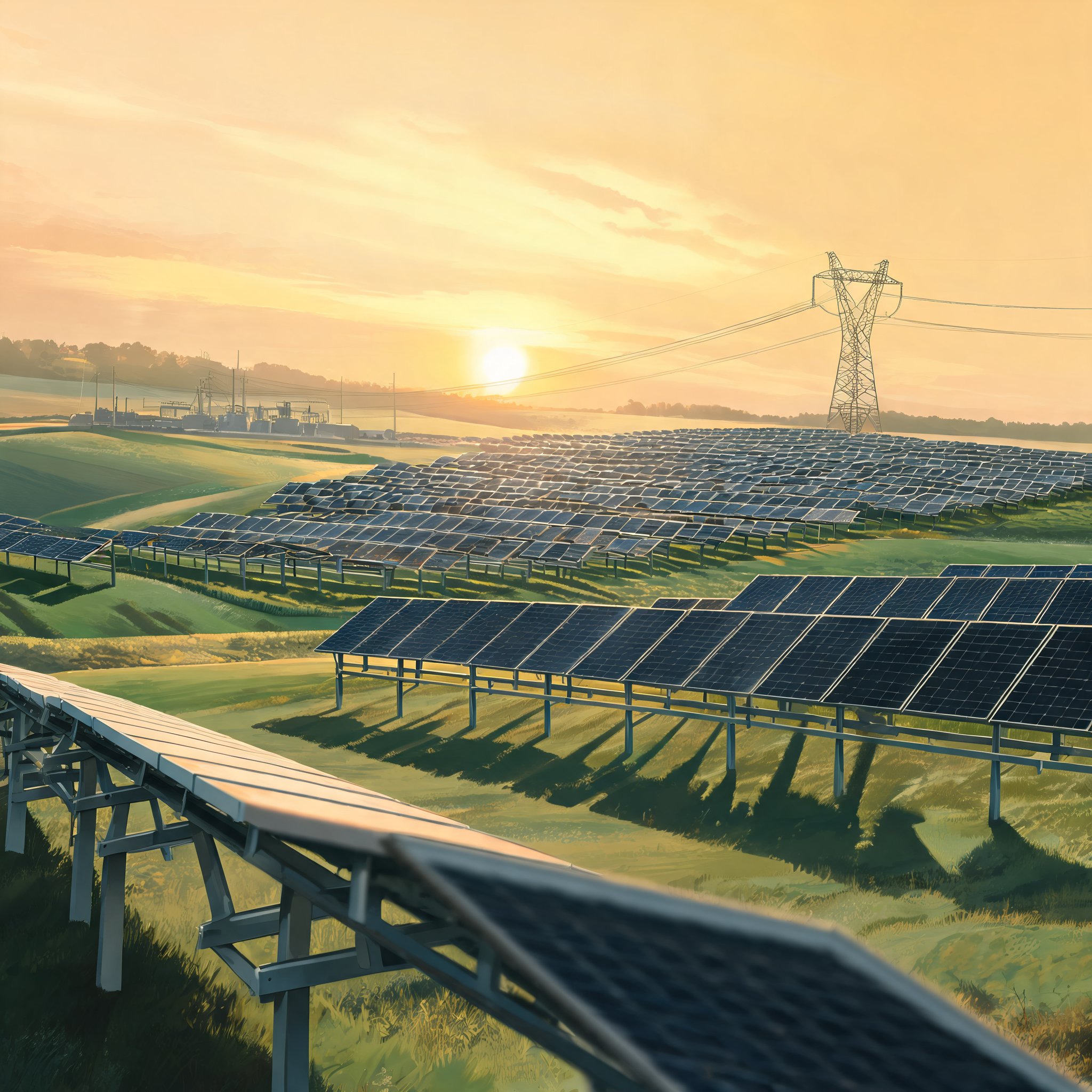
Parker said utility-scale solar, wind and battery storage can help close the gap on timelines many conventional projects cannot match. Suitable solar projects may be built within 18 months depending on permitting, equipment and interconnection, while new nuclear facilities generally require substantially longer development periods, according to the commentary. Emissions benefits depend on which generators are displaced and when electricity is delivered, it added. Faster interconnection reviews and better coordination among PJM, utilities, regulators, developers and state governments, alongside transmission upgrades, would bring capacity online sooner, Parker said.
Land use and data centers
On farmland, the commentary says well-designed projects can include restoration plans that allow agricultural use to resume when leases end, and agrivoltaic systems can pair generation with compatible crops or livestock. Parking lots, commercial properties, brownfields and landfills can also host solar, it adds. Parker further said developers of new hyperscale data centers, particularly in Virginia and other parts of PJM's territory, should demonstrate how they will secure adequate electricity and pay their fair share, using dedicated generation, renewable energy contracts, batteries, flexible demand and grid upgrades rather than a single prescribed solution such as a gas-fired peaker plant. Existing facilities should also cut peak demand where possible, with energy efficiency among the most immediate options.
Solar Mounts LLC designs and manufactures commercial and utility-scale solar mounting systems. The commentary concludes that repeated emergency orders, rising capacity costs and greater reliance on high-emission generation are not sound long-term strategies.