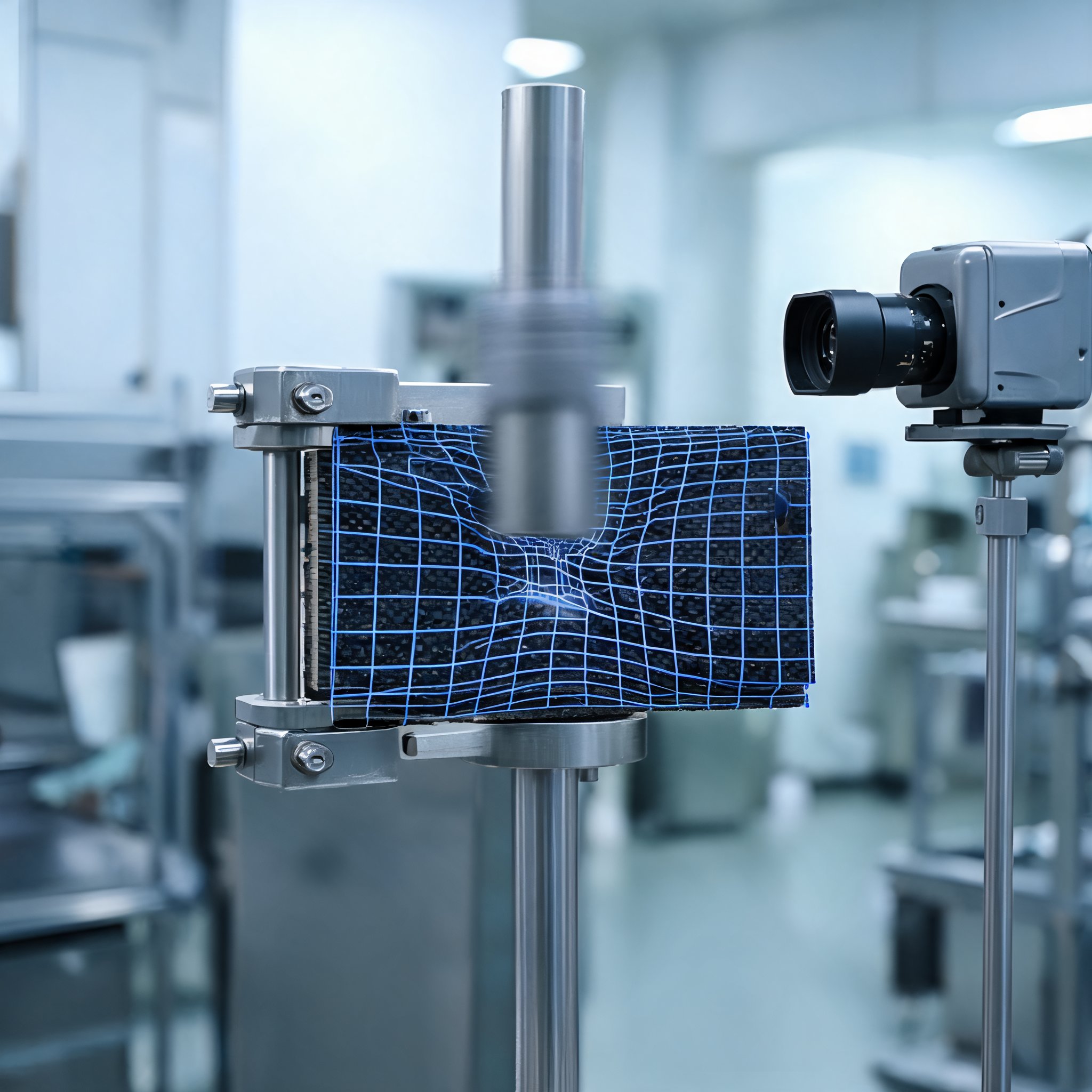
Andrea Incardona, an application engineer and product specialist at Instron, argues that simulation is only as useful as the material data behind it. In a technical article, Incardona explains how high strain rate testing can give engineers a more representative picture of how materials behave when loading is rapid, and how that data can feed simulation, material selection and product development.
Many materials have strain-rate-dependent properties, so their mechanical response can change as loading speed rises. A material characterized under quasi-static conditions may therefore behave differently in a rapid impact or crash event. Incardona points to a 2025 study in the SAE International Journal of Materials and Manufacturing, 'Influence of Strain Rate Effect on Mechanical and Crashworthiness Properties of CFRP Composite Structures', which found that adding strain-rate-dependent properties to crash simulations reduced the gap between simulated and experimental results. Peak acceleration discrepancy fell by 6.5%, while mean acceleration and displacement discrepancies fell by 5.9% and 6.3%, respectively.
According to Incardona, high strain rate characterization can extend material data from quasi-static conditions to strain rates approaching 1,000/s, depending on the material, specimen geometry and test method. Such tests can last only 3 to 10 milliseconds, so data acquisition must capture rapid changes in force and deformation. Comparing the same material at different loading rates can show whether strength, stiffness, deformation mechanisms or failure behavior change as strain rate increases. If they do, a model based only on conventional data may not represent a rapid event accurately.
Material selection and development
Conventional properties such as strength and stiffness remain important, but they may not reveal how a material will respond under rapid loading. Two materials that look comparable in conventional tests can behave differently at high strain rates. Characterizing their dynamic behavior allows engineers to consider how each deforms, absorbs energy and fails under conditions relevant to the application. Incardona says this is particularly relevant where performance must be balanced against weight, such as automotive crash structures or aerospace components.
High strain rate data can also be used earlier in development. Incardona describes a process in which material behavior is measured, incorporated into simulation, used to compare design options and then validated through physical testing. That makes testing more than a final check on an existing design; engineers can use dynamic data to assess material suitability, refine a component design and understand how changes may affect performance.
Accurate data capture is critical because high strain rate tests can take place over only a few milliseconds. Instron says its high strain rate testing systems support data acquisition at up to 200 kHz, while digital image correlation can provide additional information on strain development across the specimen. Analysis tools can then support data processing and theoretical modeling. Incardona concludes that material data is only as useful as its relevance to the conditions a component will face.