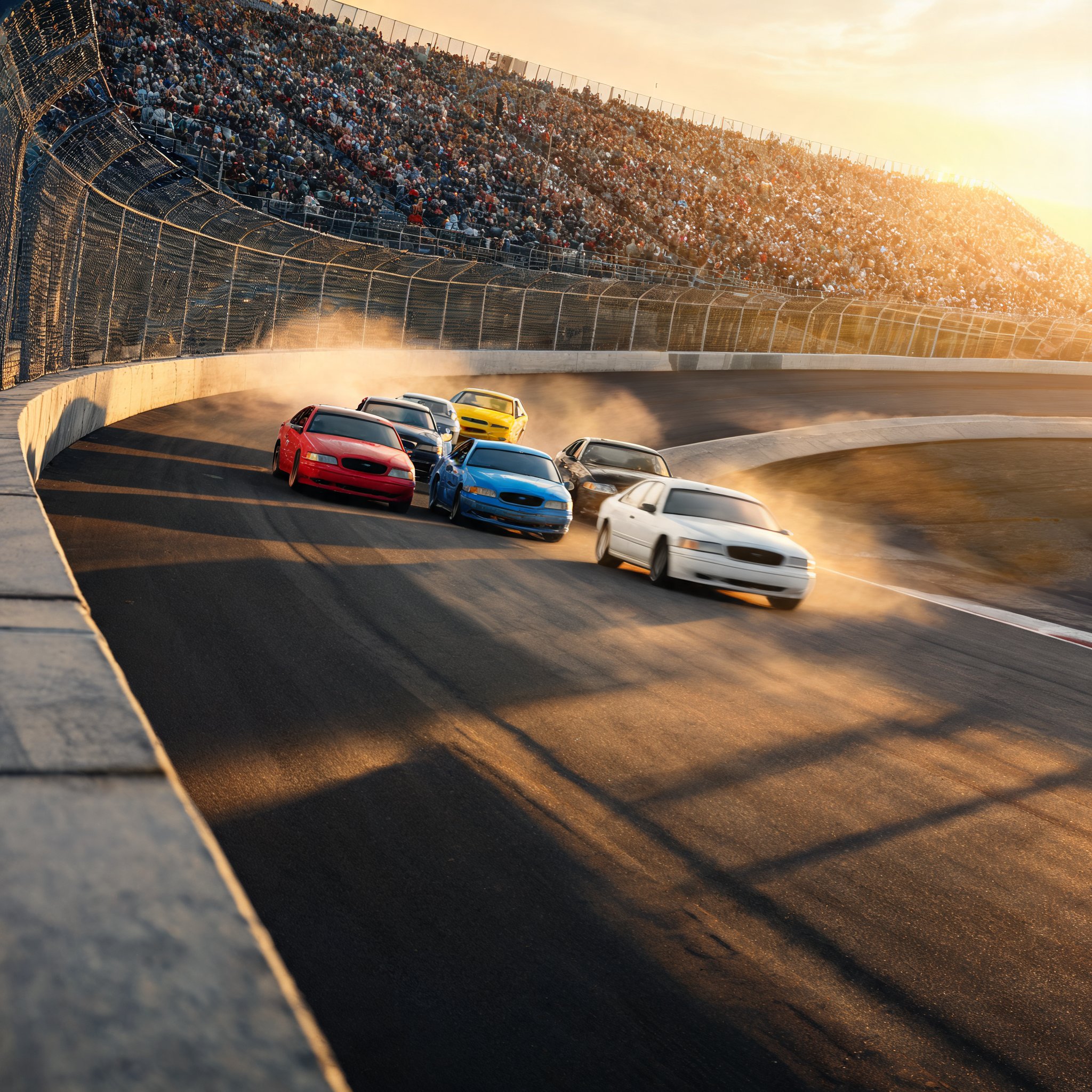
NASCAR Classics has released a new “Sights & Sounds” video from the 2001 EA Sports 500, the fall Cup Series race at Talladega. The edit uses trackside cameras and widescreen HD without commentary or narration, giving viewers a more direct sense of the cars, crowd and track atmosphere than most people would have seen on early-2000s televisions.
The channel, which carries clips and full races from across NASCAR’s 78-year history, has recently mixed these atmospheric edits into its usual broadcast uploads. The format is meant to feel closer to a home movie, with engine notes and crowd reactions carrying the scene.
The 2001 season remains closely tied to Dale Earnhardt Sr.’s fatal crash in the final corner of the Daytona 500. Michael Waltrip and Dale Earnhardt Jr. finished first and second for Dale Earnhardt Inc. in that race, and Junior became the season’s central figure. In the Talladega release, crowd noise rises as he takes the win.
Earnhardt Jr. also won the Pepsi 400, the first Daytona race after his father’s death, and the first Cup race after the September 11 attacks, at Dover. Jeff Gordon ultimately won the championship, underlining the depth of the field. The Talladega race also included Tony Stewart and Mark Martin, then 42 and driving a Viagra-sponsored Ford.
The video arrives as the 2001 season recedes further into history. NASCAR was near the peak of its popularity in the early 2000s: more commercialized than its bootlegger-era mythology, but with a formula that worked. For viewers, the appeal is simpler—clear footage, loud engines and a race that still carries emotional weight.