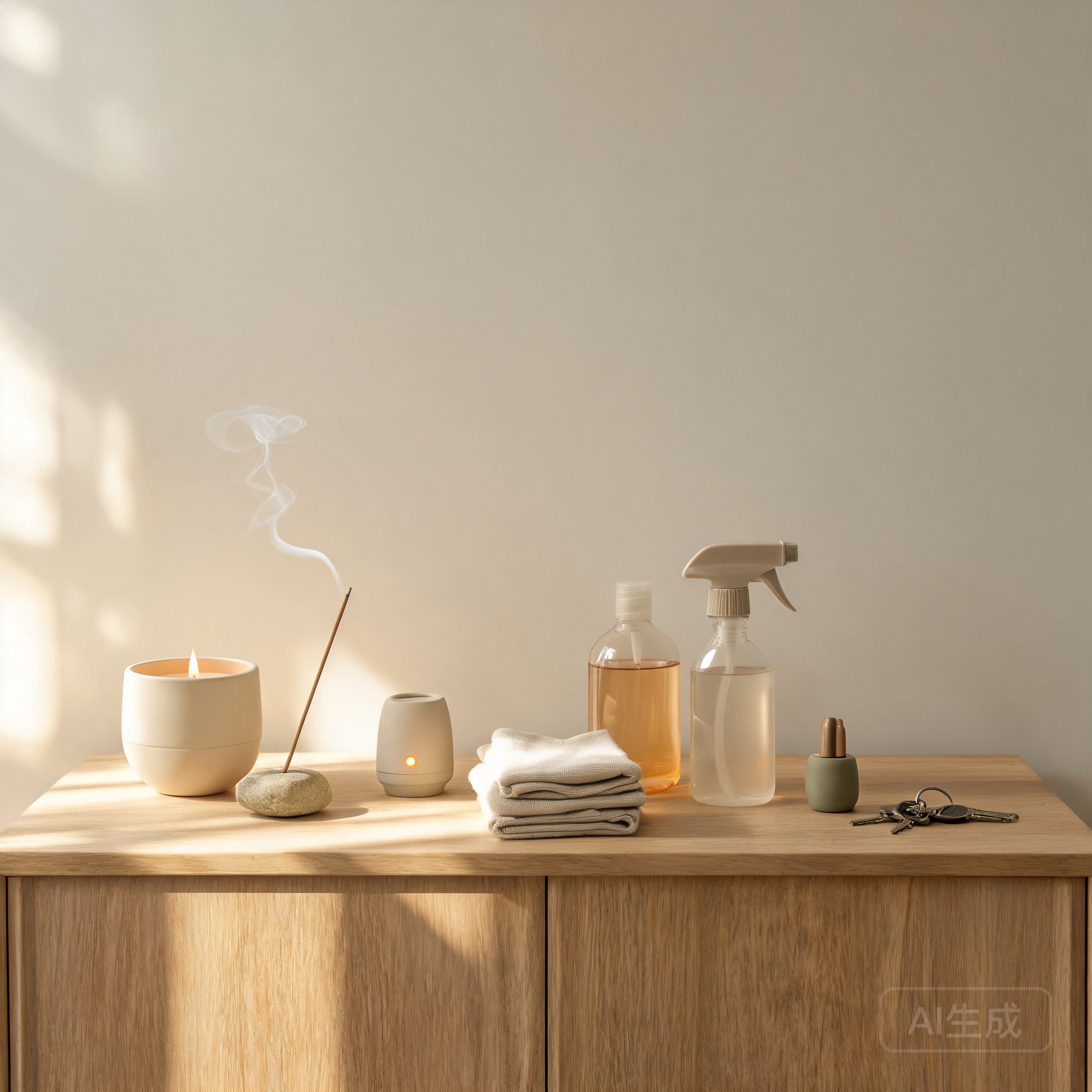
Fragrance has moved beyond the body. In 2026, scent is a full lifestyle category that reaches from skin to home, laundry, car and everyday basics, according to a Cosmopolitan trend report. As fragrance expert Sable Yong told the publication, “we’re going to see every part of our daily, seemingly mundane lifestyles scented.” The home is no longer a neutral backdrop; it is another place to wear a signature.
Cosmopolitan beauty editor Beth Gillette, who has covered fragrance for six years, tracked the shift across six areas: incense, high-tech diffusers, laundry and cleaning products, softer scent profiles, small-space objects and upgraded air fresheners. Rather than one novelty candle, the report describes a scentscape that is intentional, layered and increasingly connected to mood.
One reason home scent feels different now is the way perfume itself changed. Writing about fragrance trends through 2025 led Gillette to conclude that appetite for scent is high and that perfume is no longer just worn; it is collected, layered, discussed online and tied to identity. In 2026, that identity extends to linen mists, laundry sprays, candles and even car fresheners. Scent is becoming unavoidable, she argues, because even essentials and basics are elevated with luxurious fragrances. That expansion is what turns a personal preference into a household atmosphere.
Incense returns as a warm, design-minded ritual
Calling a centuries-old practice a trend feels wrong, Gillette notes, but as candles and diffusers have grown, incense lost some pace in mainstream fragrance. Now brands are releasing best-selling scents as incense, often with branded holders that create warmth in small spaces. She cites examples including a marshmallow, rice milk and vanilla scent in a pink holder that doubles as an ashtray; Aesop incense with vetiver and creamy sandalwood; violet-fuchsia sticks blending rose, frankincense, nutmeg and musk; and Biology’s essential-oil-based incense, whose Enlighten blend uses agarwood, cypress and smoky licorice and arrives with a jade holder. The common thread is ritual: a small, deliberate act that scents a room while looking intentional. For consumers already exploring luxury fragrance candles, incense offers a related but slower format.
Diffusers get smarter—and more controllable
When a room needs scent without a flame, diffusers are the obvious tool. In 2026, Gillette reports, the upgrade is control. Many diffusers now pair with apps, allowing users to scent a home remotely—on the drive back from the office or before a date. She highlights a compact plug-in with three natural-fragrance options in vanilla, mint and citrus; a device that uses filtered air rather than water or steam for a stronger, cleaner experience; a Pura diffuser with many scent options and two vials controlled through the app; and a Parfums de Marly model that offers Delina, Althair and two exclusive home scents via app, using a dry diffusing technique that can fill a room in minutes. The pattern is less about gadgetry for its own sake and more about removing friction: scent that can be scheduled, adjusted and trusted to stay consistent.
Laundry becomes the longest-lasting fragrance layer
Gillette points to “smellmaxxing”—combining products to overhaul one’s scent—as a habit popularized online, and says the adult version is fine-fragrance-inspired laundry care. The logic is practical: scent tends to linger on clothes longer than on skin, especially when washed in. She mentions a detergent and scent booster duo from Snif, with Tart Deco for a syrupy cherry profile and Sweet Ash for warm bedding; a newer brand offering detergents, pods, dryer sheets and fabric softeners based on fine fragrance profiles; and a sandalwood-and-cardamom detergent that makes sheets feel cozier. In this category, fragrance is not a finishing spritz but part of the wash cycle, which means a scent can inhabit a wardrobe for days.
Soft scents replace the seasonal heavyweights
After months of pine and pumpkin spice, Gillette sees a cozier era of soft scents: rose, amber, lavender, citrus and sandalwood. Examples include a candle inspired by aesthetician Sofie Pavitt’s New York studio, meant to evoke a spa; a Ranger Station sandalwood candle with powdery iris; a Flamingo Estate candle recalling a rain-soaked farm with eucalyptus, vetiver and amber; and Neroli Weather, whose lavender base is rounded by clementine, yuzu and neroli for brightness. These profiles are notable because they are less about a single loud note and more about atmosphere—comforting but not heavy. For anyone building around an aromatherapy candle, the direction is toward calm, layered blends rather than seasonal spectacle.
Small spaces and everyday cleaners join in
Limited square footage is not a barrier. Gillette highlights objects that scent and decorate at once: a wood diffuser that needs only a few drops of essential oil and no cords; a large cement vessel whose palo santo scent fills a room; and oil burners that use a votive candle beneath fragrance oil, which she predicts will be widespread in 2026. In cleaning, she describes a shift away from sharp lemon scents toward florals and foodie notes: dishwasher detergent that scents the kitchen, a rosewater, vanilla and ylang ylang dish soap, a subdued lavender all-purpose spray, a basil-scented odor remover and a citrus cleaner with a plant-based, biodegradable, vegan formula free of synthetic fragrance. Finally, car fresheners are being rethought with softer gourmand, cozy and fresh profiles, hanging diffusers and cordless cartridge devices that can run up to 15 hours per charge, plus motion-sensing models. The through-line is that home fragrance is no longer a single product but a set of choices about how every space should feel.