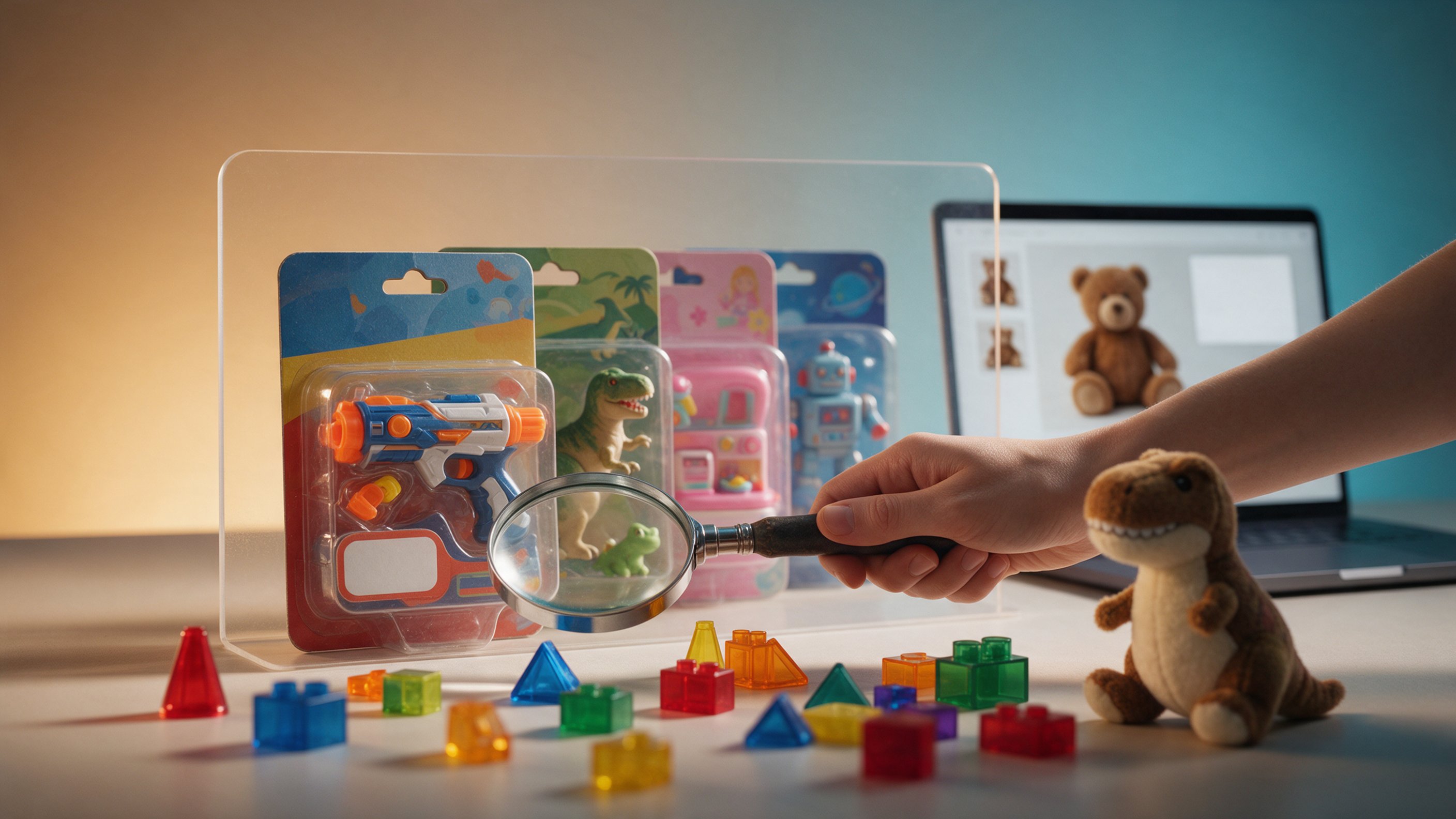
The Toy Association is warning holiday shoppers to avoid knockoff toys, saying that products sold through some online marketplaces frequently fail to meet U.S. safety requirements. The reminder comes as Black Friday and Cyber Monday approach, a period when toy buying rises.
The association says reputable toy companies and trusted retailers comply with more than 100 federal safety laws and tests. Not every seller follows those rules, however. This year, the association studied toys purchased from two e-commerce platforms, Temu and Shein, and found repeated compliance problems.
What the testing found
All toys in the study were tested by a third-party laboratory accredited by the U.S. Consumer Product Safety Commission for compliance with U.S. toy safety requirements. According to the association, 89% of the toys failed because of incorrect toy labeling and age grading, or because information was false, missing, or misleading.
The results also showed that 67% of the toys failed at least one mandatory safety test. One toy had phthalates detected at more than 90 times the maximum allowed under federal law. Another failed because it contained hazardous loose magnetic components at nearly eight times the maximum, a serious risk if the magnets are ingested. Small-parts testing was failed by 40% of the toys, an issue of particular concern for children under age 3.
How shoppers can reduce risk
The association is directing shoppers to a 'three Rs' approach:
- Reputation: choose sellers or brands with established reputations.
- Research: look into companies that are unfamiliar.
- Reviews: check product listings for typographical errors, spelling mistakes, and poorly edited images.
The findings apply to the specific products tested in the study, not to every toy sold on the two platforms or elsewhere. Even so, the association says the failure rates show why buyers should check seller and product information before purchasing, especially during peak holiday promotions.
The guidance covers both online and in-store shopping. For shoppers who do not recognize a seller, the association recommends checking the company's background and looking closely at how a product is presented before buying. It also points consumers to its website for additional safety tips.
The association's warning is focused on knockoff toys, not on every toy sold online. It says shoppers should choose reputable toy companies and trusted retailers whether they are buying on a website or in a store. The study's findings are presented as evidence that some marketplace products can carry labeling and safety problems, and the group urges consumers to verify what they are buying before completing a purchase.