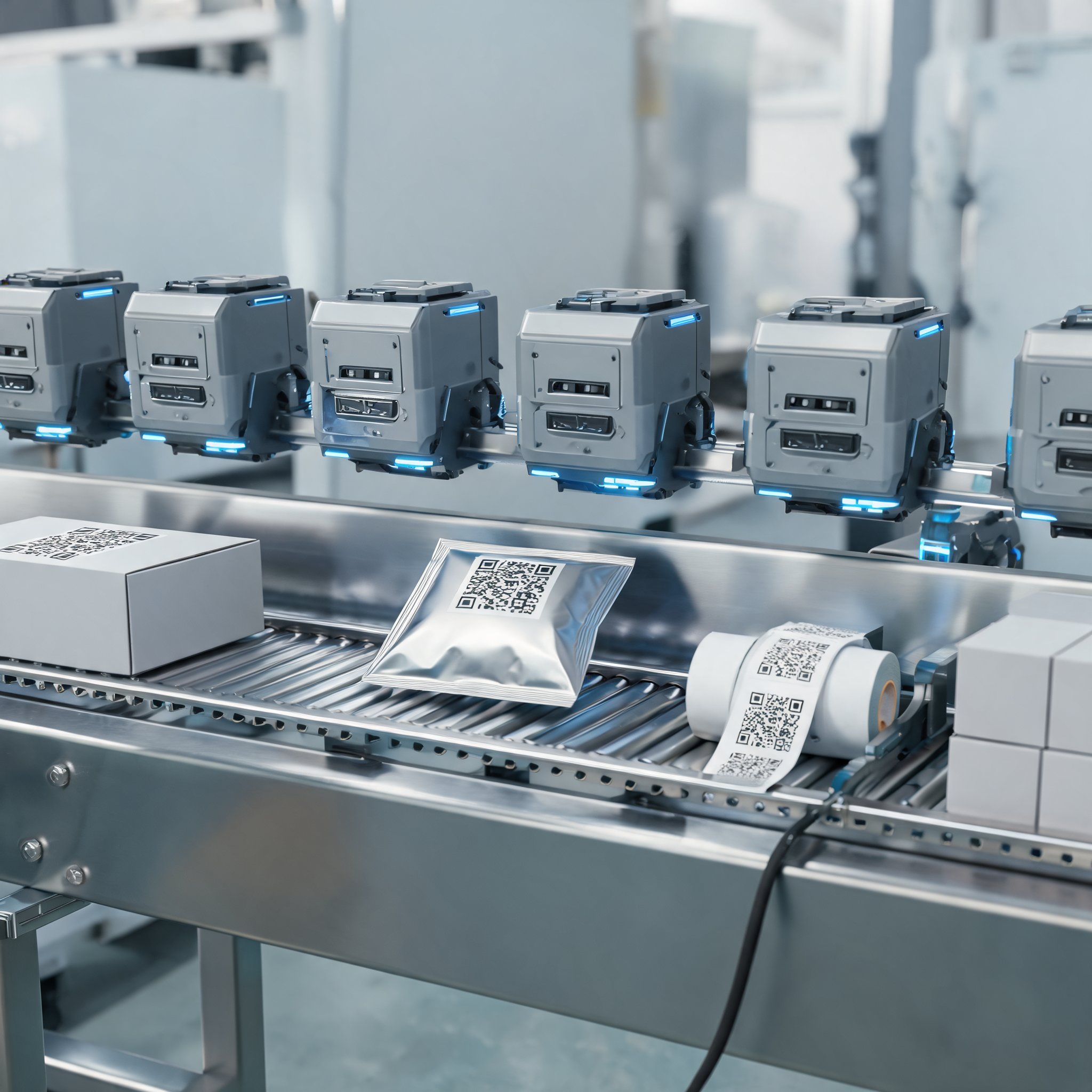
Videojet Technologies has introduced two thermal inkjet (TIJ) printers, the Videojet 8530 and the Wolke m620 touch, aimed at high-resolution coding on boxes, cartons, foil, labels and other substrates across a range of industries.
According to the company, both systems produce clear, fast-drying 2D codes at item and case level, including QR and DataMatrix codes alongside lot numbers, expiration dates, logos and other variable data. Print resolution reaches up to 600 x 600 dpi. Videojet says the printers are expected to deliver consistent code quality and readability across applications, and positions them for fast-moving packaging environments where reliable operation, intuitive use and straightforward integration matter.
Target markets and serialization
Named target sectors are cosmetics, food, beverage and electronics. The Wolke m620 touch is additionally directed at pharmaceutical and medical device manufacturers, where it is intended for high-resolution traceability codes, highly readable barcodes and fast data processing in demanding serialization applications.
Both printers are designed to slot into existing thermal inkjet environments, supporting standard communication protocols in order to simplify upgrades and reduce engineering effort. They are supplied in solid-state formats with no moving parts, which Videojet says is intended to minimise maintenance, support production uptime and enable clean, no-mess operation.
Software, validation and configuration
The Videojet SIMPLICiTY user interface includes Code Assurance features. Built-in rules and validation controls are designed to reduce coding errors, improve code accuracy and cut unnecessary printer interactions. A leader/follower configuration extends print capability by allowing multiple printheads and controllers to run as a coordinated system.
For regulated production, the Wolke m620 touch's validation package is designed to support compliance with GAMP requirements.
Both models use Videojet software and digital tools, including VRS Remote Service, CLARiSUITE print job management software, and the Velicity Design and CLARiSOFT label design tools. Videojet expects these to help manufacturers improve message accuracy, simplify job management and maintain greater control over coding operations.
Company rationale and wider market context
"Manufacturers need coding technology that keeps pace with production while helping protect product quality, traceability, and operational efficiency," said Marcy Vanderbei, global product manager for Videojet Technologies. "These new TIJ printers are designed to simplify high-resolution coding with systems that are easier to integrate, easier to operate, and easier to rely on, shift after shift."
The launch follows Videojet's unveiling of the 1880 C continuous inkjet printer, which the company anticipates will reduce cleaning, service calls and unpredictable downtime in pigmented CIJ printing; it is said to produce "bold, high-contrast" codes while offering operation and maintenance similar to a dye-based printer.
Separately, Domino Printing Sciences has revealed the Domino Cx150i, a direct-to-box piezo inkjet printer that codes onto porous substrates using ink made from vegetable oil. That machine targets secondary packaging in food, beverage and general manufacturing applications.